Legal Briefs Podcast: Building Your Legal Foundation: Filings, Policies, and Enforcement Actions
May 22, 2023

Listen to the episode
Filings, policies, and actions: Jeremy Richardson lays out the three-part legal foundation brands should build before they ever need to enforce anything.
This episode steps back from any single tactic to lay out the full legal foundation Jeremy Richardson recommends every brand build proactively, in three parts. First, government filings: trademarks, patents, and copyrights each protect a different thing (brand identity, function, and creative expression, respectively), and registering them (rather than relying on common-law rights) brings nationwide presumptive protection, enhanced damages, and often recoverable attorney's fees.
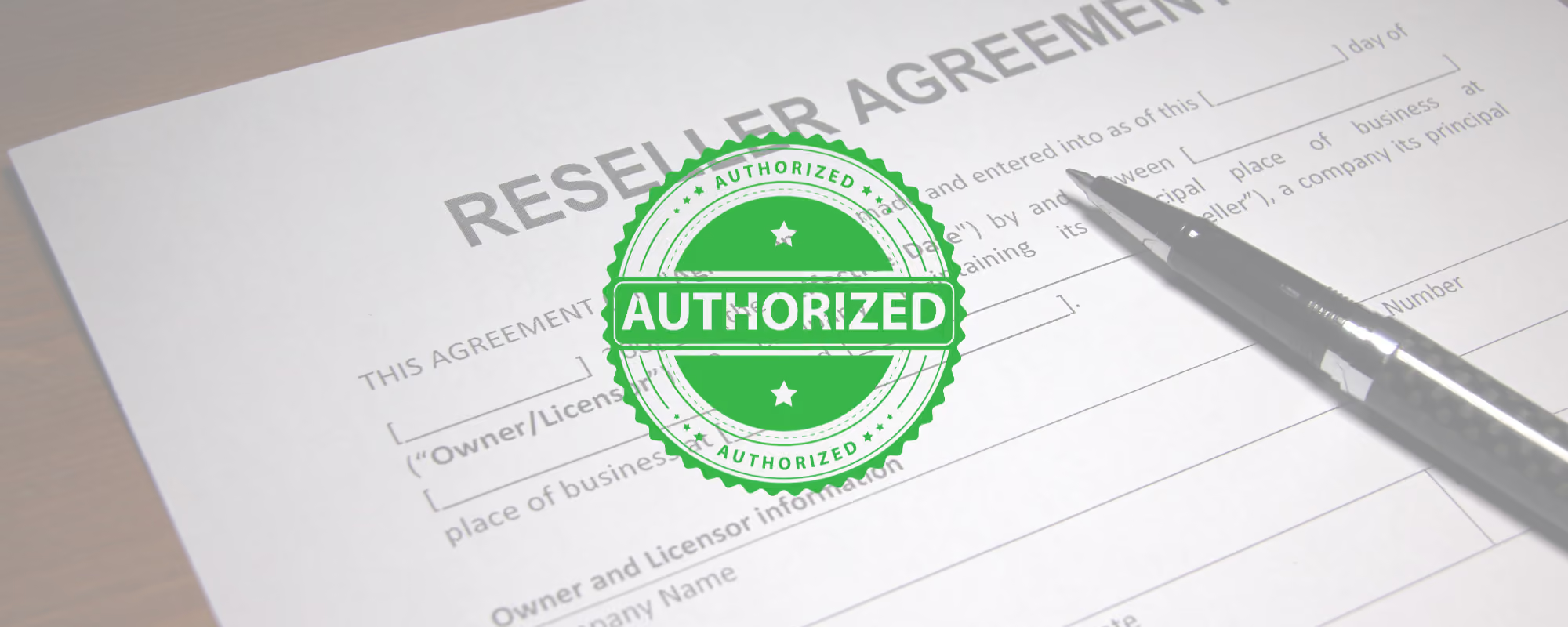
Second, policies: MAP policies, warranties, and authorized reseller/distributor agreements each play a distinct role, and Jeremy uses the episode to flag a policy type brands should generally avoid: the "Colgate policy," where a brand attempts to dictate actual retail price rather than just a floor on advertised price. That crosses into difficult-to-navigate federal and state pricing law and is rarely worth the risk. Third, actions: with filings and policies in place, brands have several enforcement tools depending on what's actually being infringed: trademark cease-and-desist letters, DMCA takedowns for copyrighted images, and IP violation notices to marketplaces, with litigation as the last, costliest resort.
- Filings: trademarks, patents, and copyrights each cover different ground: registering (rather than relying on common law) brings nationwide protection, enhanced damages, and attorney's fees.
- Descriptive marks are harder to register than fanciful ones, though descriptive marks can eventually earn protection through acquired distinctiveness.
- Policies: MAP (a floor on advertised price only), product warranties, and authorized reseller/distributor agreements each serve a distinct function.
- Avoid "Colgate policies" that attempt to dictate actual retail price, which is hard to administer and legally risky under federal and state pricing law.
- Enforcement actions depend on what's infringed: trademark cease-and-desist letters, DMCA takedowns for copyrighted images/text, and marketplace IP violation notices, with litigation reserved as a last resort.
Full Episode Transcript
[00:00] Welcome to MapTrap's legal briefs, the podcast where we explore specific strategies and tactics used by brands to protect their pricing, distribution and intellectual property rights. The information in this podcast is provided for general informational purposes only. It is not legal advice. Listening to this podcast does not create an attorney-client relationship between you and MapTrap's guest presenters. Listeners should seek legal advice from a lawyer licensed in the listener's state. Welcome to MapTrap's legal briefs, the podcast where we explore specific strategies and tactics used by brands to protect their pricing, distribution and intellectual property. Today's podcast is going to dive into creating a legal foundation to make brand protection more effective before, hopefully, you have a problem. Joining us by phone is Jeremy Richardson Esquire, a partner in the New York office of Freeborn and Peters. Jeremy's practice focuses on consumer product manufacturers. He leads Freeborn's consumer products industry team. Welcome Jeremy.
[01:11] Hey, Ron, so nice to hear you again. Hope all is well out there. Everything is fantastic. You know, living at the top of a mountain. I'm looking forward to this topic. I think this is going to be a good one. Really helpful information. So I'm ready. I'm ready to dive in when you are. Okay.
[01:26] Well, let's see. So there are many actions that brands can take in order to protect their products and sales. Taking these steps in the beginning goes a long way in saving money and heartache down the road. So what I'd like to do is maybe break this down into three sections, one on filings, one on policies and then one on actions. So tell us a little bit about what types of filings can a brand make with the government to help set the legal foundation of enforcement?
[01:58] Well, typically when I'm thinking of filings with the government for brand protection, I'm thinking of IP protection. So patents, trademarks, and copyrights. Each one of those are distinct areas of the law. Patents protect the way something works or functions. Trademarks protect the brand identity. Like when you see a swish on a sneaker, you know it's a Nike copyrights protect the expression of an idea. So as soon as I take my paintbrush and put it to the canvas and start painting, there's the expression of an idea and that's copyright protection. So each of these distinct areas can be protected through filing with the US government with patents and trademarks. It's the US patent and trademark office with copyrights. It's the copyright office. Now you do get some common law rights, even if you don't file, but there are enhanced benefits for filing. In the case of say trademarks, you get presumptive nationwide protection of your trademark. Whereas common law, you just get within the region that you're selling goods or services. You will also get enhanced damages and often you can recover attorneys fees. So there are these incentives to file and it's a really good idea to do this for companies because intellectual property is one of those sort of intangible assets can't really quite put your finger on it, but if you're ever interested in selling your company or valuing your company, those intangible assets intellectual property rights are better protected and I think really much more valuable to the outsider when you have a registration that has been issued. And going through the registration process, we'll also sort of work out the kinks, I guess, of your intellectual property rights. Again, I'll talk about trademarks for a moment. You want to make sure that the mark is clear that nobody else is using a confusingly similar mark on the same or related goods or services and the application process will essentially force you because the trademark office will go and review and look for other people using, as I said, similar marks on the same or related goods. And it essentially you know, sort of as a self clearing process, I recommend doing the clearance beforehand, but it really sets up the framework to make sure that you are the sole owner of that mark and similar concepts with patent and with copyright to ensure that your rights exist and if you have to get a court, you can enforce them. So that is what I think of when we talk about government filings to promote brand protection. Okay, not to go down a rabbit hole because we have a lot of we have a lot of ground to cover, but I am curious about when it comes to a trademark. So let's just talk about my company map trap. We have a service mark on map trap. Sometimes the USPTO comes back and says that a term you're trying to trademark is too generic or too descriptive. And then you can go ahead, but you can actually trademark a visual representation of the mark, not the actual words, but a graphic of map trap. What are the differences there and what are the benefits or disadvantages?
[05:34] So there are different types of marks and you really hit it on the head there. The broadest protection goes for what we call a block letter mark. Those are literally just the letters represented at a block format map trap being one potential block letter mark. And then you can use words with a logo. So there's combined words and image. And that has a different level of protection. Instead of using a block letter, you could go for a stylized mark like a particular type of script or font and have the trademark limited to that particular stylized lettering. So there are different, there are essentially different types of trademarks that you can use. And you're right that the trademark office when you are applying for a mark looks to see if the word that you're using is descriptive of the goods or services. And if it's descriptive, then you will not get a registration. If it is fanciful, you think of things like Kodak for film.
[06:44] Well, at least we used to think of Kodak for film. But the word Kodak was meaningless as it related to film until of course Kodak became so famous. So you look for a word that really doesn't have anything to do with the goods or services so that it's not suggestive, it's not descriptive. And those are the strongest marks that you can use. But sometimes difficult to come up with with those marks. And again, because they're not suggestive of the services, initially they may not be meaningful to consumers. So it takes some time to build up brand awareness. And then if you have a mark that is sort of descriptive, not fanciful, eventually you could get trademark rights through acquired distinctiveness. But that might be a topic for a later podcast.
[07:41] Yeah, I think we'll definitely do a little bit of a deeper dive on another one. So let's move over into policies. So now you've got your filings, you've got a trademark and a patent and copyrights. So how do you establish in policy that you have them and that you're going to defend them?
[08:02] Sure. So there are a bunch of different types of policies that you can have in terms of brand protection. One of the first that comes to mind is having a product warranty that goes with your products and assures a consumer that what they're getting is going to work. And if it doesn't, you'll stand behind it. So I think of warranties as one of the best ways to promote good customer relationships. But again, if you're going to have a warranty and you're going to stand behind your product, you have to stand behind your product. And if a consumer calls and says, hey, this broke and you have a warranty on it, you have to be you brand owner, after you willing to spend the money to replace that product, fix the product, or at least make the consumer happy. But again, I think it's a great way to promote your brand and improve relationships with consumers. Then there are all sorts of different, well, I'll call them generally pricing policies, but let's be careful about that. We've talked about map, minimum advertised price policies, Ron, you know, a little something about that. Those, of course, are the policies that regulate between the brand owner and the retailer, what the advertised price of a particular product will be, typically setting a floor for how much a product is advertised, but that is distinct from the sale price of the product, what the retailer is going to charge. So map policies are generally I like them. I think they're they're pretty commonplace in many consumer product segments and work well as long again as the brand owner is going to stand behind it and force it and apply it appropriately. Some people may have heard of these Colgate policies or minimum retail price policies.
[10:01] Well, they are in many cases lawful. I typically do not recommend having a Colgate policy. And by the way, Colgate policy is where the brand owner dictates the retail price. These can be very difficult to administer and enforce and often companies, unless they're doing it really, really, really right and being very, very careful, they can slip into essentially having agreements on pricing with the retailers. And that's where you get into these violations of a federal law and also many state laws that have their own pricing policies, or I should say laws and regulations regarding pricing policies. So it's difficult to navigate those waters both at the federal and at the state level and it's very easy to run a foul of the regulations which is why typically I do not recommend them. Then there are other agreements that you might have and I do say agreements or policies, but really agreements that you might have with the reseller, authorized reseller agreements that really contractually regulate how the retailers going to go about promoting your product. For example, if you spend a lot of money photographing your product, you may want your authorized resellers to use only your photographs and not use their own photographs to promote your product. And then of course, distributor agreements, many of our clients work with distributors. So that's just another layer of supply chain and retail distribution. And I often do recommend having a separate agreement with the distributor. There are differences between the distribution agreement and the reseller agreement from the brand perspective. Okay. And just for clarity, the difference, I know we've gone into this in a little more depth than other podcasts, but since we're here, the main difference between a policy and agreement is a signature. Correct?
[12:06] Yeah. So a policy is a unilateral doctrine within a company that we're going to do something in a particular way. And it does not require agreement. It doesn't require a signature. It doesn't require an other side to essentially enter into a contract with you. It is unilateral and one-sided. And typically, when you have a policy, you as a brand have a policy, your retailers can either abide by it or not. And if they don't, it's up to you as the brand owner to decide what to do about that. The agreements are contracts. So if you have what we typically call an authorized reseller agreement or a distributor agreement, those actually are contracts. Those are things that both sides would sign and be contractually brand-bound to and if one party or the other does not abide by its obligations, we have breach of contract. And let me just come back to the policy for a moment because it's a point that we make over and over. And I think sometimes our clients don't quite understand. A minimum advertised price policy is unilateral. It is not an agreement. It does not require it. In fact, you don't want your retailers to sign it. They could acknowledge your seat of it. But you're just telling them that this is how we operate. And if they follow it great, and if they don't, then you brand-end or have to decide what to do about that. Okay, that makes sense. And plus, you don't want to have to negotiate every time you change your map policy. And so I guess not by having it not be an agreement, you don't have to worry about getting everyone to sign off on it. You can simply change it when you want and then inform people of the change. So now let's move into the actions piece of this. And now we've gotten our trademarks and we've gotten our copyrights. We've got our policies in place. So with map, we, you know, map trap. We work with many brands and help them to enforce their minimum advertised pricing policies. We also have a couple of Colgate doctrine clients. But as we know, they're not legal documents. They're not legal policies. And so far as you can't sue someone for violating your pricing policy, you can only stop selling to them. You know, that's if you can figure out how they got the products. So what are the benefits to to any of the any of the intellectual property filings in a map policy?
[14:44] Or maybe there aren't any. And if not, that's fine. How do you then defend the policies, the filings through policy?
[14:52] Well, when we talk about trademark, for example, and we did a podcast last season about the first sale doctrine and whether a retailer obtaining legitimate, non-counterfeit goods that bear your company's trademark, whether they can just sell it in any manner they want to sell your product in any manner they want to regardless of the brand image and how you use brand owner would like the interaction to be between the retailer and the consumer. And of course, the answer that we talked about in that prior podcast was know that a retailer has to abide by your sales standards. And if they're not, it actually is a trademark infringement. So if you have a map policy that talks about how you want the retailers to promote your brand and look what's face at part of the minimum advertised price policy is to level the playing field so that retailers will invest in your brand and sell it in the proper manner. And if a rogue retailer obtains your product through some distribution channel that you didn't authorize and they're not selling and promoting your product and your brand in the way that it should be, it is a trademark infringement. So that is one example of how these filings trademark filings can really help a brand in terms of enforcing its policies including a map policy. Okay. And so how do you go about how do you go about enforcing through the policies, right?
[16:34] So you're using a product like map trap price and product monitoring system. And so what are the tools, digital millennial copyright, seasons exist?
[16:49] Are there differences? What's the best way to go about that?
[16:49] So in terms of enforcing the policy, when you're using a company, when you're using map trap and bronze resources and you discover a retailer that is not abiding by the minimum advertised price, then you want to contact them and tell them that you as a company have determined to take certain action. And it could be that you're first going to alert them to the situation. Maybe they weren't aware of it. If it's a retailer that you are familiar with, if it's a rogue retailer that you've never heard of, it may require sending a notice that they are violating your trademark rights and telling them that they have to stop and then taking further action in that way. If it is a copyright, if they're using your images without your permission and selling product on a third party platform, you can send a digital Millennium Copyright Act takedown notice to the platform. And that will be responded to very quickly by most of these third party platforms, certainly the reputable ones, because they will be liable if they don't act within a particular period of time. So it could be depending upon whether you know who the retailer is or not. It could be either a DMCA takedown notice if it's copyright, that by the way does not apply the trademark. It could be a cease and assist letter if you know the identity of the retailer. It could be filing with the third party platform if it is a trademark and IP violation notice, which even though not under the DMCA, most of these platforms will respond to. And if you can provide them with proof of your trademark registration or your patent registration or if it's again copyright DMCA copyright registration as evidence of your rights, that is a way to get product removed from those sites. So when you say platform, are you being specific to an Amazon or an eBay or are you talking about the domain registrar like a go daddy or a hostway?
[19:02] I'm talking about an Amazon or an eBay or one of these e-commerce platforms where product is being sold by third party retailers. And what about a non-platform based e-commerce store?
[19:15] That's a Shopify store and that they've got ronsdogpets.com. Well they too can be subject or are subject to the intellectual property rights laws and potentially subject to infringement damages. So again if you know who they are, if they're running an e-commerce store, if it's on Shopify or if it's on their own website and they're violating your IP rights, a cease and assist letter is usually the first step. And if that is not responded to, often it would then get escalated to a lawsuit. Okay and that's something that we really do want to avoid because that runs into some money and not every brand can afford to go there. So hopefully all of the all the points that you've made during this podcast will work and that they'll go away. I guess we can have another podcast about how to sue someone, what are the costs and what's the effort involved there?
[20:25] For now let's just finish this one out.
[20:25] Thank you very much. I think we've spoken about a lot of things and you know your wisdom is always appreciated, sir. Perfect. Yep. And if you have any questions or you have any recommendations or suggestions for podcasts, please reach on out and have a great day. If you'd like to submit a question or topic for a legal briefs podcast, email them to legal briefs at maptrap.com. For more information about how maptrap can help you with your online brand protection needs, visit www.maptrap.com.
Who's undercutting you right now?
Pick up to three products. We'll scour Amazon, eBay, Walmart and Google Shopping and show you exactly where you're exposed.