How to Set Up an Authorized Reseller/Dealer Program
Listen to the episode
An authorized reseller program is an agreement between a brand and its resellers that allows sellers to distribute the brand's products in exchange for certain benefits: exclusive discounts, access to marketing materials, and more. Every partner added to your network becomes an extension of your brand, shaping customer perception long after the sale. When retailers discount irresponsibly, sell through unapproved channels, or mishandle products, the damage compounds quickly. When they follow clear standards instead, your brand value holds, customers trust what they buy, and the channel stays healthy.
MAP Policy vs. Authorized Reseller Program: What's the Difference?
Brands typically lean on two complementary strategies for online brand protection, and it's worth being precise about what each one actually does.
A MAP policy protects retail margins and brand perception. It's a unilateral statement from the brand establishing the lowest price at which a product may be advertised. It doesn't dictate the final sale price, and it isn't a signed agreement so much as a mandatory rule for any merchant that wants to carry the brand. Non-compliance consequences range from loss of discounts and terms up to full suspension.
An Authorized Reseller Program (ARP) establishes and supports a brand's distribution network, and through that, its perceived value. It controls things like seller type (mass market vs. specialty, marketplace vs. dedicated e-commerce), intellectual property usage, and channel restrictions. An ARP can exist as a policy, but it's far more powerful as a signed agreement, since the obligations and benefits of authorization can then be written directly into the terms and conditions of sale.
Choosing Your Approach: Existing Sellers vs. a Clean Slate
Implementing a MAP policy is fairly straightforward. Standing up an ARP is trickier, particularly when it comes to deciding how to handle the online sellers you already have. There are two primary approaches:
"Everyone is authorized until they're not." For brands with an established population of online sellers, even ones they don't fully recognize, this is the easier starting point. There's no need to immediately de-authorize, vet, and re-authorize every retailer. Instead, launch MAP, observe seller behavior, and de-authorize based on non-compliance as it surfaces. The tradeoff: seller visibility can be difficult to establish (especially through wholesale distributors), de-authorization can be a losing battle if sellers keep sourcing inventory elsewhere, and existing favored retailers may balk at how large the seller population still is.
"Nobody is authorized until they are." This is the ideal approach for brands with little existing online distribution, and ultimately, the destination every brand should be working toward. It puts the brand in control from day one: authorize and de-authorize based on behavior before any damage occurs. Brands that start with the first approach should plan to migrate to this one once control has been re-established, and it should be the default for any new account going forward.
Brands working through independent sales reps or wholesale distributors face an added wrinkle either way: reps need to either collect signed ARP agreements directly or route new accounts to the brand for approval, and distributors are frequently reluctant to share account-level information about who they're actually selling to. Because implementing MAP and ARP strategies can carry legal implications depending on jurisdiction, it's worth seeking legal counsel before finalizing either approach.
Setting Up Your Authorized Reseller Program
Once you've settled on an approach, the setup itself follows a few concrete steps:
- Establish criteria for who makes the cut as an authorized dealer: location, customer service history, and past or present ability to hit sales goals are common factors.
- Set pricing strategies that reflect each dealer's competitive position in their region, while maintaining a healthy margin and fair compensation for their effort.
- Fold your minimum advertised pricing policy directly into those pricing terms.
- Decide on distribution options and any incentives or bonuses you'll offer authorized dealers. This is what keeps high performers loyal, engaged, and MAP compliant.
- Open applications for the program.
Vetting New Resellers: Due Diligence Before You Sign
A thoughtful selection process signals that authorization carries responsibility, not just access to inventory, and brands that take it seriously see stronger MAP compliance, fewer disputes, and steadier long-term growth. Before signing any new authorized reseller, work through the following:
- Brand alignment. Reflect on your brand's current image and desired positioning, and confirm the prospective seller's presentation and values actually align with it.
- Pricing strategy and MAP history. Do they respect MAP policies today? Have they been involved in pricing disputes, and is their pricing approach transparent?
- Online reputation. Review customer reviews, social presence, and customer service track record. Look for patterns across multiple sources rather than one-off complaints.
- Marketing and sales practices. Confirm their promotional tactics and target audience match your brand values.
- Compliance history. A track record of MAP violations or unethical practices with other manufacturers is a strong signal of future problems.
- Operational history. How long has the business operated in this category, and what does that history say about how it will perform once authorized?
- Legal and operational fundamentals. Confirm appropriate licenses, certifications, and dealer credentials are in place, and that the retailer complies with applicable data privacy regulations if it handles customer data on your behalf.
- Fulfillment standards. Storage, handling, shipping, and returns all shape how customers experience your product. Retailers who manage these details carefully reduce risk across the whole channel.
Reseller Agreements vs. MAP Policies: Why the Distinction Matters
Confusion between reseller agreements and MAP policies is a common source of enforcement headaches. When the two aren't clearly separated, brands can unintentionally weaken their own ability to control pricing and channels.
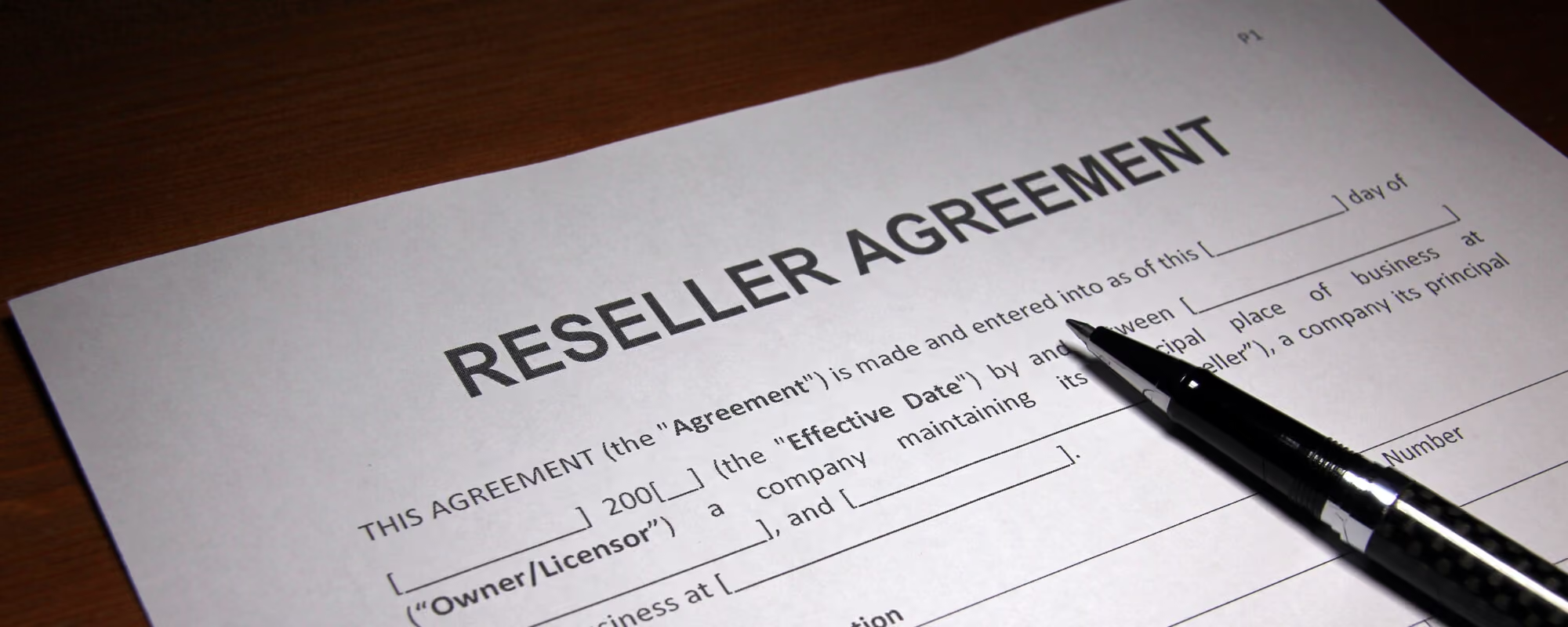
An authorized reseller agreement is a signed contract defining the legal relationship between brand and retailer. Within it, brands can build in material differences (quality control standards, warranty eligibility, and packaging/labeling requirements) that legally distinguish authorized products from anything sold through unauthorized channels. Typical examples include:
- Products sold by authorized sellers are subject to the brand's quality control standards, inspection procedures, and chain-of-custody requirements.
- Products sold by authorized sellers are eligible for the brand's manufacturer warranty and customer support programs.
- Products sold by authorized sellers must include all original packaging, inserts, manuals, and required safety labeling.
These distinctions matter because they establish that gray-market listings are not equivalent to authorized offerings, which strengthens your position when challenging unauthorized sellers. A MAP policy, by contrast, is a unilateral pricing statement, not a bilateral agreement; brands typically request written acknowledgment of receipt rather than a signature, which preserves enforceability while reducing antitrust exposure. Treating the two as interchangeable is exactly how brands end up with a compliance framework that's harder to defend than it needs to be.
Benefits of an Authorized Reseller Program
Done right, an authorized program benefits brands and buyers alike. It gives brands a wide network of vetted, reliable partners they can trust with marketing and merchandising, and gives consumers assurance that what they're buying is authentic. Being an authorized seller typically comes with real privileges:
- License to use the brand's trademarks and copyrighted images
- Direct customer service from the brand
- Product warranties
- Product and sales training
- Access to special deals and new product releases
An authorized program is also a quality-control lever: a brand is usually only as good as its weakest link, which is exactly why having the right criteria for who gets in matters so much.
Building Strong Relationships With Your Resellers
A successful program depends on the relationship, not just the paperwork. A few practices consistently pay off:
- Communicate openly and frequently: regular conversations about goals, policies, and upcoming changes keep resellers informed and build trust.
- Offer training and support: arm resellers with product knowledge, marketing materials, and selling guidance so they can succeed with your brand.
- Be responsive to their needs: promptly addressing questions and feedback strengthens loyalty on both sides.
- Establish clear guidelines and expectations: make sure resellers understand your MAP policy, IP usage rules, and the real consequences of non-compliance.
- Offer incentives and recognition: re-ordering discounts, early access to new products, and featured placement reward the resellers doing it right.
Ongoing Monitoring and Enforcement
Vetting and agreements set expectations; monitoring is what determines whether those expectations actually hold. Once a retailer is authorized, ongoing oversight is essential to catch channel drift: products showing up on unapproved platforms or at prohibited prices. Authorized sellers are generally eager to follow the rules, but they want confidence that everyone else is being held to the same standard.
Clear, consistent enforcement criteria remove emotion from the process and keep it fair across the network. A typical escalation path looks like: a formal warning for an initial violation, temporary suspension of supply for continued non-compliance, and permanent removal from the network as the final step, with some agreements including liquidated damages clauses to recover financial harm to market value. These consequences create a real deterrent, and they reinforce that authorization comes with accountability, not just access.
Vetting doesn't end at onboarding, either. Because online channels shift constantly, continuous oversight is what catches small issues before they spread across the market. That's where MAPP Trap comes in: our product monitoring software tracks sellers, channels, and advertised prices around the clock, giving you the visibility to act decisively and keep only authorized sellers carrying your products, without spending your team's time doing it manually.
We can help you put together a successful authorized reseller/dealer program so you can start building your brand faster.
Who's undercutting you right now?
Pick up to three products. We'll scour Amazon, eBay, Walmart and Google Shopping and show you exactly where you're exposed.